
13 May 2026 Media Statement: Chief Justice pays tribute to the Rt Hon Sir Kenneth Keith ONZ KBE PC KC
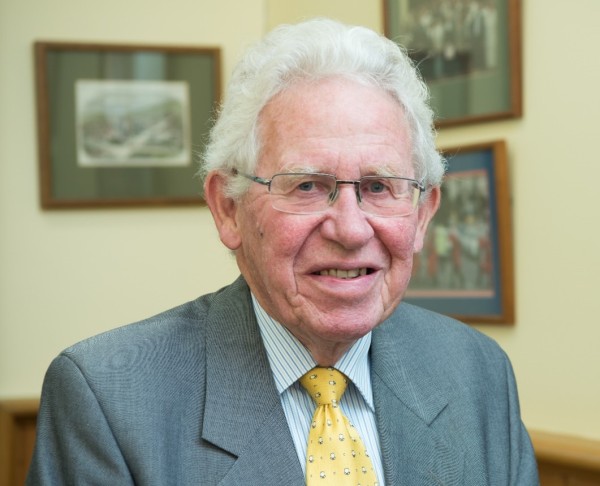
The Rt Hon Sir Kenneth Keith ONZ KBE PC KC (1937 – 2026) (Photo credit: Victoria University of Wellington)
The Chief Justice, the Rt Hon Dame Helen Winkelmann, today paid tribute to the Rt Hon Sir Kenneth (Ken) James Keith ONZ KBE PC KC, who passed away on 13 May 2026.
“On behalf of the New Zealand judiciary, I acknowledge Sir Ken’s exceptional contribution to New Zealand and to the international legal order as a legal academic, law reformer and judge, including on the Supreme Court of New Zealand and the International Court of Justice.”
“Over the span of a long and dedicated career as a teacher, Sir Ken played an important role in developing the legal minds and constitutional understanding of many of today’s leaders, both within the law and beyond. He saw legal education as a matter not just of learning rules, but of understanding legal process and what he termed ‘the law-making enterprise’.[1] By my estimate, at least 20 of New Zealand’s current senior court judges were educated by him.”
“Through his work as a legal academic and as an adviser and law reformer, he not only helped to shape New Zealand’s constitutional settlement, but also helped to explain it to the rest of us. He was a founding member of the Law Commission of New Zealand and, for a time, its President. As a careful champion of law reform, he was one of the architects of monumental constitutional statutes: the Official Information Act 1982, the Constitution Act 1986 and the New Zealand Bill of Rights Act 1990. As a member of the Royal Commission on the Electoral System, he played a key role in our adoption of a mixed-member proportional representation system of government. As the author of the Introduction to the Cabinet Manual, Sir Ken produced one of New Zealand’s most important constitutional documents, articulating — in one place, in plain language, and for the first time — the foundations of our current form of government.”
“Sir Ken’s contributions as a sitting judge were immense and far-reaching. In his judging, he worked tirelessly in the service of justice. He sat on appellate courts in New Zealand and across the Pacific. Having served as a judge of the Court of Appeal in New Zealand and on panels of the Privy Council in London, he was one of the five judges to make up the inaugural Supreme Court bench when it was established in 2004 as New Zealand’s final court of appeal. Sir Ken is the only New Zealand judge to have been elected to the International Court of Justice in The Hague, which is the principal judicial organ of the United Nations. That was a Court with which he had already had a long association. As an advocate, Sir Ken had appeared there in the 1970s and 1990s on behalf of New Zealand in cases brought against French nuclear testing in the Pacific.”
“As much as being remembered for what he did, Sir Ken will be remembered for how he did it. His boundless curiosity and his enthusiasm for ideas gave him an informed knowledge of the law, and of how it sat within a broader history, that was second to none in New Zealand. He was happy to share that knowledge and wisdom to the betterment of his colleagues, the law and our society. The importance of mentoring was valued highly by him. Warm and generous in his manner and optimistic by nature, he was, quite simply, a lovely man. He will be remembered by a legion of lawyers and by his judicial colleagues and friends as a wise, humane and kind person who was endlessly interested and interesting.”
“Today we have lost a great New Zealander. I extend my deepest sympathy to his family."
Sir Ken had one of the most consequential legal careers in our country’s history and he achieved a vast amount during his life. This tribute attempts to memorialise some of his contributions to the law.
Education
Sir Ken was born in Auckland in November 1937 and educated at Howick District High School and Auckland Grammar School. As a part-time law student (as law students were, in those times), he balanced his study commitments with employment as a clerk in the Magistrates’ Court in Auckland, and also served as a court taker in the Traffic Court, the Police Court, the Civil Court and the Family Court. He received his LLB from the University of Auckland in 1960. Following his admission to the bar in 1961, he took up a role as a lawyer in the Department of External Affairs.
Academic career
Sir Ken then joined the Faculty of Law at Victoria University of Wellington. This began a lifelong association with a university that he loved. His first stint of teaching was from 1962 to 1964, during which time he earned an LLM (1963) from Victoria. From 1964 to 1965, he completed a second LLM at Harvard Law School.
Returning to Victoria University in 1966 as a faculty member, he served as Dean of the Faculty of Law from 1977 to 1981. Sir Ken continued at Victoria University until his retirement from teaching in 1991. This time at Victoria was interrupted by a two-year stint in the Office of Legal Affairs at the United Nations in New York, and at the same time a shared position as Director of the New Zealand Institute of International Affairs.
Sir Ken was awarded Doctor of Laws degrees from the University of Auckland in 2001, and from Victoria University in 2004.
Law reform
From 1968 to 1970, Sir Ken worked in the Office of Legal Affairs at the United Nations Secretariat in New York, then as Director of the New Zealand Institute of International Affairs from 1971 to 1973. As a member of various law and constitutional reform bodies, Sir Ken went on to help shape many statutes that are now fundamental to New Zealand’s constitution. These bodies included:
- the Working Party on the Reorganisation of the Income Tax Act 1976, whose review contributed to the staged rewrite of New Zealand’s income tax legislation using plain English;
- the Danks Committee on Official Information, whose recommendations formed the basis of the Official Information Act 1982;
- the officials’ committee which recommended constitutional reform, resulting in the Constitution Act 1986;
- the committee which prepared the 1985 White Paper on a Bill of Rights for New Zealand; and
- the 1986 Royal Commission on the Electoral System, whose report Towards a Better Democracy recommended the adoption of mixed-member proportional representation.
Sir Ken was a founding member of the Law Commission from 1986 to 1991, and as President from 1991 to 1996.
As a respected constitutional scholar, Sir Ken was called upon to write an introductory essay to the Cabinet Manual in 1990, entitled, “On the Constitution of New Zealand”. As the Manual was revised, Sir Ken provided updated versions of this essay to accompany it.
Judicial career
Sir Ken was appointed Queen’s Counsel in 1994. His judicial career began in the early 1980s as an Appeals Judge in Samoa and the Cook Islands. He would go on to serve as an appellate judge in Fiji and Niue.
In April 1996, Sir Ken was appointed a Judge of the High Court and Court of Appeal to replace Sir Robin Cooke. At Sir Ken’s swearing-in ceremony, Chief Justice, the Rt Hon Sir Thomas Eichelbaum, highlighted the new Judge’s excellence: his appointment as Queen’s Counsel in 1994 was only the second time in 15 years that anyone had been appointed to the senior bar outside the normal annual process, and his appointment straight to the Court of Appeal was only the third instance in 40 years where that course had been thought appropriate. (Senior court judges are in all but exceptional circumstances appointed first to the High Court.)
Sir Ken served as a judge of the Court of Appeal from 1996 to 2003. He was appointed a member of the Privy Council in May 1998, which enabled him to sit on the Judicial Committee of the Privy Council until 2003 when New Zealand replaced it with the Supreme Court. In January 2004, Sir Ken was made an inaugural Judge of the Supreme Court. He served on New Zealand’s highest court until 18 November 2005, when he retired. He was appointed an acting judge for 24 months.
Sir Ken made notable contributions to the Supreme Court’s nascent jurisprudence in his 16 months of service on that bench. Zaoui v Attorney-General (No 2), for instance, balanced national security concerns with human rights and has become a touchstone in common law jurisdictions where courts are tasked with making decisions in respect of refugees who face deportation.
International contribution, including to International Court of Justice
As a member of New Zealand’s legal team challenging the legality of French nuclear testing in the Pacific, Sir Ken appeared as an advocate in the International Court of Justice in 1973 and 1974, and again in 1995. Sir Ken also led the New Zealand delegation to the Diplomatic Conference which prepared the additional Protocols to the Geneva Convention in 1977. He was a member of the Settlement of Investment Disputes in 1994, and a member of the International Humanitarian Fact-Finding Commission under the first additional Protocol to the Geneva Convention for the Protection of War Crimes from 1991 to 2006, including as president from 2002 to 2006.
In 2006, and as the first and only New Zealander to achieve this honour, Sir Ken was elected to the International Court of Justice (ICJ), based in The Hague. He served a full nine-year term on the ICJ before retiring in 2015. He worked on two further cases for the ICJ as an ad hoc judge from 2021.
Through his work as an academic and as a judge, Sir Ken has consistently reminded New Zealand of the international frameworks to which it is a signatory — playing a leading role in establishing the principles as to how those international commitments interact with New Zealand domestic law.
Further service and honours
In recognition of his long-time service to the New Zealand Red Cross, Sir Ken in 2000 was made a Counsellor of Honour — a title only 20 people can hold at any given time. The same honour was given in 2007 to Lady Jocelyn Keith, former president of the New Zealand Nurses Association and former president of the New Zealand Red Cross.
Sir Ken was made a Knight Commander of the Order of the British Empire in 1988 for services to law reform and legal education. In the 2007 Queen’s Birthday Honours, he was appointed a Member of The Order of New Zealand, New Zealand’s highest honour.
Sir Ken is survived by his wife, Lady Jocelyn Keith, their children Judi, John, Susan and Ben, and their nine grandchildren.
[1] KJ Keith “1883 to 2008: Law and Legal Education Then and Now” [2009] NZ L Rev 69 at 76.